
'It is a testing time for our foreign policy which may involve a certain element of taking risks, assessing costs, and expecting failures,' asserts Commodore Venugopal Menon (retd).

India was U Thaung Tun's first port of call after his appointment, which should intrigue China and Pakistan, says Rajeev Sharma.

Unless the Taliban goofs up in a big way, which seems highly unlikely, we are looking at a regime that will be around for quite a long while and present a level of governance that the puppets of the richest and most advanced countries failed to provide, predicts Ambassador M K Bhadrakumar.

China, a veto-wielding member of the UNSC, has blocked the move by India and other member nations three times in the past to designate Azhar.
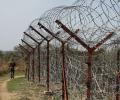
Introducing a new irritant into the bilateral ties, Pakistan has complained to UN Security Council alleging that India was building a wall along the International Border in violation of the world body's resolutions.

The BJP calling the Congress a "torn old party" moving towards a stage where its relevance and necessity will be completely lost.

Though General Naravane's visit will not deal with 'impermanent' issues like the changing stands of politicians, it will certainly reinforce the deeper 'permanent' links between the people of Nepal and India. Time will hopefully tackle the present impermanence of the Sino-Nepalese romance, notes Claude Arpi.
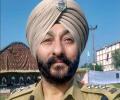
Why did RA&W hire a man with a questionable record, wonders David Devadas.
'No prime minister of India is averse to normalise relations with Pakistan, if it is possible to do so without altering our fundamental position on Jammu and Kashmir,' notes Ambassador T P Sreenivasan.

'The Modi government's pusillanimity vis-a-vis Pakistan makes almost certain that India will, in the coming weeks and months, be confronted with cross border terrorist actions of increasing intensity,' warns Satish Chandra, former deputy national security adviser.
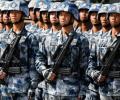
While China's nationalistic tabloid Global Times said India should be taught a 'bitter lesson', another official newspaper, China Daily, said India should look in the mirror.
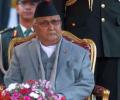
'The redrawing of the map with the inclusion of Kalapani area by Nepal and endorsement from the House of Representatives shows the KP Oli government's move to gain cheap popularity in the name of nationalism'

The invitation to the "Dalai Lama for activity in the disputed areas between China and India will only damage peace stability of the border areas as well as the bilateral relationship between China and India", Chinese foreign ministry spokesman Lu Kang.

Chinese equipment contracts had been given by many public sector undertakings and government companies for their networks, even in sensitive places such as the north east.
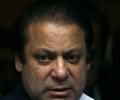
Raking up the Kashmir issue, Prime Minister Nawaz Sharif on Thursday said it is the "main source of tension" in Indo-Pak relations and sought its peaceful resolution to explore new ways to bolster bilateral ties.

"They cry victim when they actually are the perpetrators," she said, rejected Pakistan's charges against India on the issue at the 42nd session of the UNHRC.

Arguing that Pakistan will remain a key player in counter terrorism post-2014, the United States has proposed $280 million in military assistance to the country, although it wants to cut civilian aid in an effort to acknowledge India's concerns about misuse of the funds.

In a turnaround, Pakistan asked for "more evidence and information" from India on the Mumbai attack case and asserted that talks cannot take place without Kashmir being on the agenda, barely three days after the two countries agreed to re-engage.

The briefing comes ahead of the parliament session beginning Monday.

Pak seeks US help to ease tensions with India.

Mattis applauded India's efforts to promote stability in the South Asia region, said Pentagon Spokesperson

The road ahead will be long and winding and much resistance can be expected from the high-flying 'hawks' in our skies. But that should not deter the policymakers from planning a road map with the 'big picture' in mind, observes Ambassador M K Bhadrakumar.
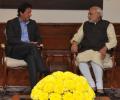
Should India engage Pakistan's generals directly, bypassing Imran? Ambassador G Parthasarathy, India's former high commissioner to Pakistan, ponders Delhi's diplomatic dilemma.
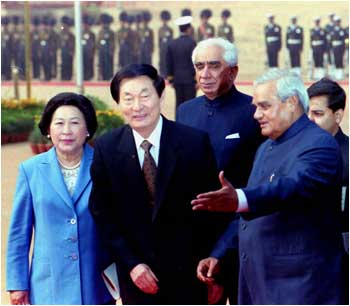
'He knew that a regime which believes that power flows from the barrel of the gun can only be handled from a position of comprehensive strength and not from a position of vulnerability and weakness,' says Rup Narayan Das.

Pakistan on Wednesday brushed aside India's unhappiness over Prime Minister Nawaz Sharif's Advisor on Foreign Affairs Sartaj Aziz's meetings with Kashmiri separatists in New Delhi, saying such meets were "customary" and the Kashmir issue remains the "core dispute" between the two countries.

Making a statement in Lok Sabha, Singh also said the Indian Army has inflicted heavy costs including casualties on the Chinese side during the clash with the People's Liberation Army at the Galwan valley on June 15.

'One must remember that a dragon has a forked tongue,' warns Vivek Gumaste.

Vajpayee had always felt that India must act with conviction and panache. He decided that, irrespective of the attendant risks, he would undertake what many felt was a precarious course. A fascinating excerpt from N K Singh's Portraits Of Power: Half A Century Of Being At Ringside on Atalji's 96th birthday, December 25.

Sayeed said he was disappointed over the abrupt cancellation of talks but hoped that break would be "temporary".

'Wherever in the world there is political instability, those countries are beset with severe crises today. But India is in a much better position than the rest of the world due to the decisions taken by my government in the national interest,' President Droupadi Murmu said in her address to both Houses of Parliament.

India said a new mechanism will be set up for issues relating to trade and investment.

It's a packed 5-nation, 9-day, visit for Prime Minister Modi as he heads to Uzbekistan, Kazakhstan, Kyrgyzstan, Turkmenistan and Tajikistan, apart from Ufa in Russia.

The Border Defence Cooperation Agreement with China needs closer scrutiny, says Rup Narayan Das.

China and India on Wednesday held their upgraded strategic dialogue to shore up bilateral ties amid hectic parleys to resolve differences over Beijing's reluctance to support India's bid for Nuclear Suppliers Group membership as well as a United Nations ban on JeM chief Masood Azhar.

Prime Minister Modi told President Xi that he has made efforts to improve ties with Islamabad but these efforts have been "derailed".

China on Tuesday said border talks with India have yielded "initial results", enabling the two neighbours to properly handle their differences over the vexed boundary issue and maintain peace along the frontier.

Interestingly, India had objected to the establishment of a UNHCHR when it was proposed by the US at the Vienna Conference on Human Rights in July 1993 and the whole proposal was remitted to the General Assembly in New York because India and others said that the whole issue should be examined in detail, says Ambassador T P Sreenivasan, who had led the Indian delegation for negotiating the terms of the HCHR.

The agreement would divert China's attention and keep them busy in the Pacific theatre, probably resulting in a reduction in threat perception in our area of interest in the Indian Ocean, notes Commodore Venugopal Menon (retd).

'It is strange that a country like India, which had gone through crisis after crisis resulting from militancy, insurgency and terrorist attacks, should still be practising ad hocism in managing its security imperatives,' says B S Raghavan, the distinguished civil servant and former member of the Joint Intelligence Council.

The stakes are high and it is not certain that slow-moving foreign office bureaucracies can measure up to the challenges being thrown up, says Hardeep S Puri.
